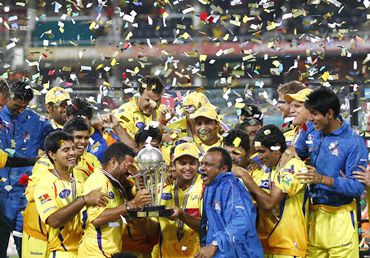
Has T20 invaded world cricket? Srinivas Bhogle attempts to find out.
Where will Twenty20 take the game of cricket in the future?
And what scoring patterns are yet to see the light of day?
Here's a glimpse.
There was a memorable song that we sang in our youthful days:
Anhonee ko honee karde Honee ko anhonee Ek jagah jab jamaa ho teeno Amar Akbar Anthony
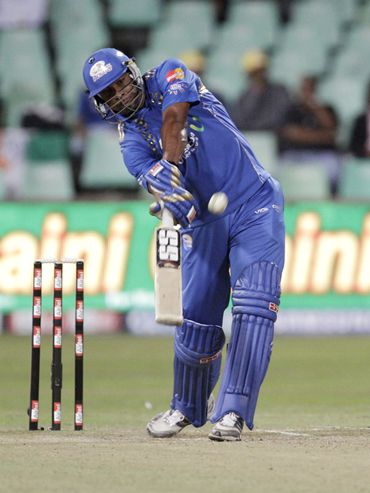
I found myself humming this song, which eulogizes the ability of a trio to achieve the impossible, as I watched Kieron Pollard unleash a cavalcade of sixes as Mumbai Indians defeated Guyana in a Champions League match.
Pollard scored 72* in 30 balls, and compelled the commentator to ask a tantalizing question: "What can Pollard achieve if he gets to face all 120 balls in a T20 match?"
Even if Pollard were to bat 84 balls at that rate, he would reach his double century! And remember it was just the other day that Sachin Tendulkar became the first player to score 200 in a 50-over ODI match.
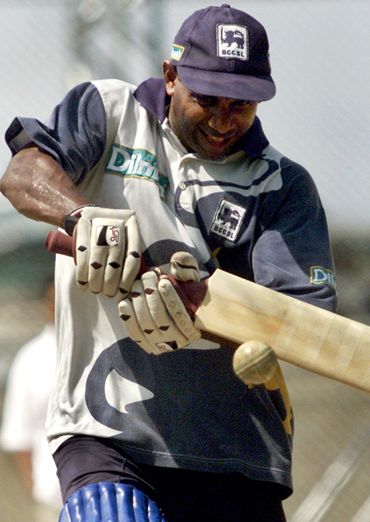
It is interesting to study how the batsman's strike rate has grown over the years. A random sample from the Cricinfo archives reveals some interesting patterns.
For the best part of 20 years (1955-75), the average strike rate in Test cricket hovered around 2.5 runs per over. After 1975, the strike rate inched closer to 3, especially on good batting tracks in Australia.
The coming of ODI cricket pushed strike rates higher; but not by too much to start with. 225 was often a good score in the first World Cup in 1975 - and remember these were 60-over games. So we were still looking at a top rate of about 4 runs per over.
Through the 1980s and early 1990s, the top ODI strike rate only grew modestly from 4.0 to about 4.75. A target of 250 was considered difficult to chase right up to the 1992 World Cup in Australia. Duckworth-Lewis, who analyzed scoring patterns in the early and mid-1990s, concluded that the average team score (on which their G50 criterion was based) was 235; but recommended a G50 choice of 250 if the match was played in flat batting conditions.
By the end of the 1990s, 250, i.e. a strike rate of 5.0, was no longer considered safe; chiefly because Jayasuriya and Kaluwitharana introduced the practice of slog hitting to take advantage of the early innings ODI field restrictions (although Mark Greatbatch probably started the trend).
With two high-scoring peaks in an innings, instead of just the end-over slog hitting, a strike rate of even 5.5 became feasible.
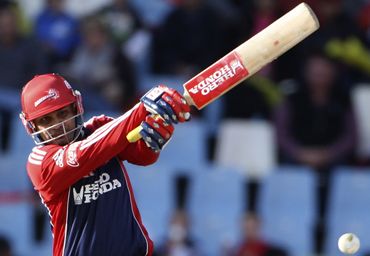
But, even as we ushered in the year 2000, a target of 300 (strike rate of 6.0) was still considered as some sort of an upper limit that could seldom be breached. If your team scored 300 batting first, you almost always won!
This was also the phase when the mischief of bringing in the boundary ropes and making unbelievably flat pitches increased.
With any ball outside the leg stump also being routinely no-balled, the cricket establishments tried their hardest to make 300+ scores 'easy' in the sub-continent, and 'gettable' elsewhere (e.g., England). South Africa successfully chasing down Australia's 434 became a chilling pointer of how this mischief could affect cricket's balance between the bowler and the batsman.
The 'ODI effect' now started becoming apparent even in Test cricket. With batsmen like Gilchrist and Sehwag, and even Smith and Pietersen, abandoning the defensive mode, daily Test match scores usually crossed 300, and often even 350.
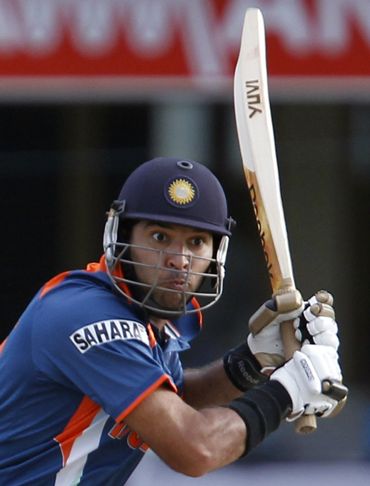
And then T20 invaded world cricket - and 150 becoming a kind of average score at most places (except early English season and New Zealand) with even 200 possible if Brendon McCullum or Yuvraj Singh is in that kind of a mood.
So at this point of time (2010), the three cricket versions are characterized by approximately a 2-run per over difference: average strike rates of 3.5 in Tests, 5.5 in ODIs and 7.5 in T20.
But what of the future?
Kieron Pollard's batting suggests a possible mutation of the batting gene (and the cricket bat) in which practically every batting stroke is played in the air, and the defensive stroke is completely banished. Is this pretty cricket? I'm not too sure; but I know that it is awesome to watch.
It really boils down to the following: would you rather see a 4 or a 6 from a batsman? I would rather see a 4, but I greatly fear that cricket is headed the other way. And one of these days somebody is going to define an '8' if the 6 is more than 100m.
If that happens, we might be measuring strike rates in terms of runs per ball instead of runs per over! So Pollard's strike rate will be 2.4 or more, and as more youngsters learn to hit the cricket ball that way, per ball strike rates of up to 3 are conceivable.
And then cricket, I fear, will become 'not cricket.'
 © 2025 Rediff.com - Investor Information - Advertise with us - Disclaimer - Privacy Policy - Feedback - About us - Terms of use - Grievances